Why Is My Furnace Making Loud Noise?
Table of Contents
- Different Heating System Sounds
- 1. Furnace Making Humming or Buzzing Noise
- Blower Motor Maintenance Tips
- 2. Furnace Making Clicking Noise
- 3. Furnace Making Banging Noise
- 4. Furnace Making High-Pitched Squeaking or Whistling Noise
- Air Filter and Furnace Noises: The Connection
- 5. Furnace Making Rattling Noise
- What Should You Do When You Hear These Sounds Coming From Your Furnace?
- Preventive Maintenance to Reduce Furnace Noises
- When to Replace a Heat Exchanger
- Boiler vs. Furnace Noises: Key Differences
- Furnace Noises and Safety Hazards
A furnace making loud noise signals a component problem that needs diagnosis. Furnaces produce several normal operating sounds: a brief click at startup, a low hum from the blower motor, and a soft whoosh of air through vents. Sounds like banging, screeching, rattling, or persistent buzzing point to specific mechanical or combustion problems.
Smile HVAC technicians are TSSA-certified (TSSA: Technical Standards and Safety Authority, Ontario’s safety regulator for fuels) and licensed in gas, plumbing, electrical, and refrigeration. We diagnose furnace noises across the Greater Toronto Area daily. This guide explains what each sound means, which requires urgent attention, and what you can do before calling a professional.
Different Heating System Sounds
Every home heating system produces noise during normal operation. Identifying your system type is the first step in diagnosing the noise source correctly.
A furnace is a forced-air heating system that burns natural gas or propane to heat air, then distributes that air through ductwork using a blower motor. Furnaces are the most common home heating system in North America, found in the majority of Canadian homes built before 2010. Normal furnace sounds include a brief click at startup, a low hum from the blower during operation, and a gentle whoosh of conditioned air through supply vents. Loud banging, grinding, or persistent buzzing fall outside the normal operating range.
A boiler is a water-based heating system that heats water and circulates it through radiators or radiant floor tubing. Boilers produce distinct sounds that differ from furnace noises. Common boiler sounds include gurgling from air trapped in water lines, a kettling rumble from mineral scale on the heat exchanger, and water hammer banging when pressure waves travel through pipes.
A heat pump is an electric system that transfers heat between indoor air and outdoor air. Heat pumps produce a refrigerant hiss at startup, a low compressor hum during operation, and occasional cycling clicks. A heat pump producing grinding or screeching indicates a compressor or outdoor fan motor problem.
Confirming your system type before continuing saves diagnostic time. Newer GTA builds and recent energy retrofits increasingly use heat pumps as a primary heating source.
Common sounds by heating system type:
- Furnace: startup click, low blower hum, air whoosh through vents
- Boiler: gurgling in pipes, kettling rumble, water hammer banging at pressure changes
- Heat pump: refrigerant hiss at startup, compressor hum during operation, cycling clicks
1. Furnace Making Humming or Buzzing Noise
A humming or buzzing noise from a furnace usually originates in the blower motor, capacitor, or transformer. Each source produces a slightly different sound, which helps narrow the diagnosis before a technician arrives.
The blower motor is the component inside a furnace that circulates heated air through ductwork and supply vents in every room. A healthy blower motor produces a consistent low hum and fan noise during operation. A motor starting to fail produces a louder, persistent hum, buzzing, or squealing that worsens as the motor heats up during a heating cycle.
Blower motors typically operate reliably for 10 to 15 years. After that point, bearing wear and capacitor degradation accelerate, and the noises produced become progressively louder until the motor fails entirely.
Three causes explain most furnace humming and buzzing:
- Worn blower motor bearings: Bearings allow the motor shaft to rotate smoothly. Worn bearings create a low grinding hum that worsens as the motor reaches operating temperature.
- Failing motor capacitor: The capacitor helps the blower motor start under load. A failing capacitor creates a distinct buzzing before startup, sometimes accompanied by a delay before the blower engages.
- Loose transformer or electrical connections: A transformer supplying low-voltage power to the furnace control board buzzes continuously when connections loosen. This buzz stays constant regardless of blower activity.
A blower motor with worn bearings draws more current than a healthy unit, raising your monthly energy bills before it fails completely. Motor issues that begin as a mild hum during the first year of wear develop into persistent squealing and then complete motor seizure within one to two heating seasons if left unserviced. Replacing motor bearings or the full blower motor costs significantly less than an emergency no-heat call during a January cold snap.
A $120-plus-tax diagnostic visit by a Smile HVAC technician covers the full motor assessment, with that fee deducted from the final repair price when work proceeds.
Blower Motor Maintenance Tips
Regular blower motor maintenance prevents most humming and buzzing noises before they develop into component failures. Both direct-drive and belt-drive motor types require different maintenance procedures, so identifying your motor type is the first step.
Maintenance homeowners can safely do:
- Switch the furnace off at the circuit breaker before touching any components inside the cabinet.
- Replace the air filter every 60 to 90 days. A clogged filter forces the blower motor to work against increased resistance, generating heat and accelerating bearing wear.
- Vacuum accessible blower compartment areas to remove dust buildup. Dust accumulation raises motor operating temperature and shortens motor life.
- Check that all furnace access panels are fully seated and latched. Loose panels vibrate against the furnace cabinet and create buzzing sounds that mimic internal motor problems.
- On belt-drive blower motors, inspect the rubber V-belt for visible cracks, fraying, or glazing. A belt showing any of those signs needs replacement before it snaps and stops the blower entirely. Check belt tension by pressing down at the midpoint: more than half an inch of deflection indicates a loose belt that will slip and generate noise.
Tasks that require a licensed technician:
- Lubricating motor bearings on direct-drive blower motors requires disassembly and specific high-temperature lubricant. Using the wrong lubricant damages the bearing race.
- Testing capacitor microfarad ratings requires a multimeter. A capacitor reading more than 10% below its rated value needs replacement before the motor fails to start.
- Inspecting transformer output and tightening electrical connections requires safe access to live components inside the control compartment.
We recommend scheduling a furnace tune-up each fall, before the GTA heating season starts. A Heating Protection Plan from $14.99/month covers free emergency call-outs and repair costs throughout the plan term. A Heating Maintenance Plan is a separate plan at $9.99/month covering annual maintenance visits.
2. Furnace Making Clicking Noise
A single click at furnace startup is normal. The ignition system fires to spark the burners, and that click stops once the flame establishes. Clicking that continues after the furnace starts, repeats without burners lighting, or occurs mid-cycle points to a component fault.
Three causes explain most abnormal furnace clicking:
- Ignition system fault: The igniter or flame sensor fails to establish or confirm a stable flame. The furnace controller keeps firing the igniter, producing repeated clicking without any heat output.
- Malfunctioning relay on the control board: A relay inside the control board opens and closes to direct power to furnace components. A relay cycling incorrectly produces irregular clicking throughout the heating cycle.
- Loose internal components: Loose screws, panels, or heat shields vibrate at startup and create metallic clicking that sounds like an ignition fault.
Repeated clicking without heat is a diagnostic signal, not just a noise problem. Our technicians identify whether the cause is a dirty flame sensor (a quick, low-cost repair) or a failing control board before recommending any parts. A $120 plus tax diagnostic visit covers the full assessment, with that fee deducted from the repair cost if work proceeds.
3. Furnace Making Banging Noise
A banging or booming noise from a furnace at startup almost always indicates delayed ignition inside the combustion chamber. Homeowners frequently describe this sound as explosion-like, and the comparison is apt.
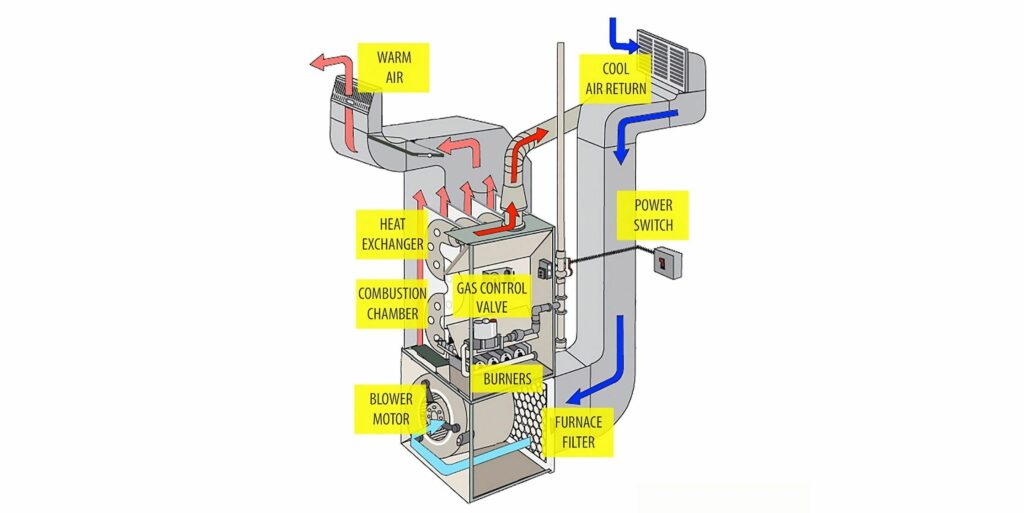
The combustion chamber is the sealed metal component inside a furnace where gas mixes with air and burns to produce heat. Under normal conditions, the burners light within two to three seconds of the gas valve opening.
When burners are dirty, corroded, or misaligned, gas accumulates inside the chamber before igniting. That accumulated gas creates a small but forceful explosion when it finally lights, producing the explosive bang that makes homeowners question whether the furnace is safe to operate.
The Technical Standards and Safety Authority (TSSA) classifies delayed ignition as a safety-related fault requiring inspection by a licensed gas contractor. Repeated delayed ignition events impose thermal stress on the heat exchanger and accelerate crack formation over time.
What you can observe safely:
Many furnaces have a sight glass on the burner compartment. A healthy gas flame burns blue with a small yellow tip. An orange or flickering flame signals incomplete combustion. Incomplete combustion causes delayed ignition and produces carbon monoxide as a byproduct.
Carbon monoxide is an odourless, colourless gas that causes headache, dizziness, and nausea at low concentrations and loss of consciousness at higher concentrations. Install a carbon monoxide detector within 5 metres of sleeping areas if your home does not already have one.
Common causes of delayed ignition, in order of frequency:
- Dirty burners coated with rust or combustion residue blocking gas flow to the flame
- Low gas pressure caused by a failing gas valve not opening fully
- Clogged burner orifices restricting gas delivery to individual burners
- Misaligned burners from a previous repair shifting the flame pattern
A banging sound originating from ductwork rather than the furnace cabinet indicates a separate issue covered in section 5.
4. Furnace Making High-Pitched Squeaking or Whistling Noise
A high-pitched squeaking or whistling noise from a furnace points to the heat exchanger, blower motor bearings, or an airflow restriction in the ductwork or filter.
The heat exchanger is a curved metal component inside a furnace that transfers heat from combustion gases to household air while keeping those two air streams completely separate. A healthy heat exchanger produces no noise beyond a faint tick as the metal expands at startup. A cracking or cracked heat exchanger produces whistling, hissing, or a high-pitched screech as combustion gases leak through developing fractures.
Heat exchangers develop cracks from three causes:
- Metal fatigue from thermal cycling: Repeated heating and cooling contracts and expands the heat exchanger metal thousands of times per heating season. Cracks develop at mechanical stress points after years of sustained operation.
- Overheating from restricted airflow: A clogged filter or blocked return vents force the furnace to run hotter than its design temperature. Sustained overheating accelerates metal fatigue measurably.
- Improper sizing from a previous installation: An oversized furnace short-cycles, heating and cooling the heat exchanger more frequently than a correctly sized unit, compressing years of thermal stress into a shorter period.
A cracked heat exchanger allows combustion gases, including carbon monoxide, to enter household air directly. Any whistling or hissing from the furnace cabinet requires professional inspection. Our technicians inspect heat exchangers using combustion gas analyzers and visual inspection tools during every furnace service call.
Air Filter and Furnace Noises: The Connection
A clogged air filter causes furnace whistling and blower strain more often than most homeowners expect.
The air filter is a replaceable media panel that sits at the return air intake of a furnace. The filter traps dust, pet dander, and debris before those particles enter the blower motor, heat exchanger, and burner assembly. A clean filter maintains adequate airflow through the furnace.
A clogged filter blocks that airflow, creating a pressure differential that produces whistling at the filter housing, duct transitions, and return air grilles. Regular air filter replacement reduces unusual furnace noises and improves system efficiency by allowing the blower motor to operate within its designed airflow resistance range.
MERV (Minimum Efficiency Reporting Value) ratings measure how densely a filter traps particles. A MERV 8 filter captures fine dust and pollen while maintaining adequate airflow for most residential furnaces.
A MERV 13 filter, designed for allergy control, restricts airflow in furnaces not engineered for high-resistance media. Using a MERV 13 filter in a furnace rated for MERV 8 creates airflow restrictions that produce whistling and put excess strain on the blower motor bearings.
Recommended filter replacement schedule:
- Home without pets, one or two occupants: every 90 days
- Home with one pet or moderate dust levels: every 60 days
- Home with multiple pets or allergy sufferers: every 30 days
Replace the filter with the furnace powered off at the thermostat. Check the filter slot for gaps around the frame after installation. A filter seated with gaps allows unfiltered air to bypass the media entirely, reducing both filtration effectiveness and the noise-reduction benefit of a clean filter.
5. Furnace Making Rattling Noise
A rattling noise from a furnace or ductwork requires identifying the source location before diagnosing the cause.
Ducts are metal channels that carry heated air from the furnace to each room in your home. Sheet metal duct sections are joined with screws and sealed with metal-backed tape. As ducts heat during furnace operation and cool after the blower shuts off, the metal expands and contracts.
This thermal movement produces occasional popping or ticking sounds, which are normal. A loose duct section rattles continuously during blower operation rather than ticking once at a temperature transition.
Time-based test for locating the source:
Rattling that starts the moment the blower activates typically originates in the ductwork rather than inside the furnace cabinet. Rattling during the furnace startup sequence, before the blower engages, comes from inside the cabinet itself.
DIY duct noise solutions:
- Tighten sheet metal screws at duct joints that have backed out over multiple heating seasons.
- Apply metal-backed HVAC tape over loose duct seams where the original tape has dried and separated. Standard household tape degrades in the heat cycling of an HVAC system.
- Secure flexible duct connections that have slipped off rigid collars at supply or return branches.
Rattling from inside the furnace cabinet, particularly when combined with reduced heat output or unusual temperature swings, indicates a component problem that requires a professional inspection. A loose blower wheel rattles against the motor housing and can damage the shaft if ignored for a full heating season.
What Should You Do When You Hear These Sounds Coming From Your Furnace?
Acting quickly when a furnace makes unusual sounds prevents a minor component issue from becoming a costly emergency repair.
Step 1: Turn the furnace off at the thermostat and let the system cool for 15 minutes before opening any panels or inspecting components.
Step 2: Check the air filter. A clogged filter causes or worsens humming, whistling, and blower motor strain. Replace the filter if the media appears grey or blocked.
Step 3: Inspect accessible duct connections and furnace cabinet panels. Tighten any sheet metal screws that have backed out.
Step 4: If the noise persists after those steps, or if you smell gas or the furnace fails to produce adequate heat, call us at 437-777-4555. The diagnostic fee is $120 plus tax, which is deducted from the repair price when work proceeds.
Preventive Maintenance to Reduce Furnace Noises
Scheduled furnace maintenance prevents the majority of noise-related component problems before they develop into failures.
Natural Resources Canada reports that modern high-efficiency gas furnaces achieve AFUE (Annual Fuel Utilization Efficiency) ratings of 90 to 98%, converting nearly all consumed fuel into usable heat. A furnace skipping annual maintenance loses measurable efficiency and generates increasing noise as components wear without correction.
Monthly tasks homeowners can manage independently:
- Check the air filter and replace it when visibly grey or when holding it to light shows no light passing through the media.
- Listen for new sounds during the first five minutes of furnace operation each month. Most component problems first become audible during startup, when thermal stress is highest.
- Keep the area around the furnace clear of stored items. Boxes and clutter vibrate during blower operation and create rattling sounds that mimic internal component problems.
Quarterly tasks to schedule between seasons:
- Inspect the blower compartment for dust accumulation on the motor and blower wheel. Dust buildup raises operating temperature and accelerates bearing wear.
- Check the condensate drain line on high-efficiency furnaces for blockages. A blocked drain triggers a furnace shutdown and can produce gurgling sounds at the drain pan.
- Visually inspect the flue pipe connections for separation or rust at the joints. A loose flue section allows combustion gases to leak into the mechanical room.
Annual professional maintenance checklist:
Each fall, a Smile HVAC technician inspects and services the following furnace components:
- Burner cleaning: removes combustion residue and rust that cause delayed ignition and banging at startup
- Heat exchanger inspection: identifies cracks before carbon monoxide leaks develop into a safety hazard
- Blower motor service: checks bearing condition, cleans the blower wheel, and tests capacitor output
- Igniter and flame sensor cleaning: prevents repeated clicking and extended ignition cycles
- Flue and venting inspection: confirms safe exhaust of combustion gases from the home
- Thermostat calibration: corrects temperature drift that causes short-cycling and uneven heat delivery
According to Natural Resources Canada, a gas furnace receiving consistent annual maintenance operates reliably for 10 to 15 years. A furnace that skips regular service averages closer to 12 years of reliable operation, with increasing breakdown frequency and noise in the final seasons.
A Heating Protection Plan from $14.99/month covers repair costs and free emergency call-outs. A Heating Maintenance Plan from $9.99/month covers scheduled seasonal tune-ups and priority service booking.
When to Replace a Heat Exchanger
A cracked heat exchanger cannot be repaired. The component requires complete replacement, or the furnace itself requires full replacement.
Heat exchangers crack because the metal flexes through thousands of heating and cooling cycles over years of operation. Each cycle expands the metal at combustion temperatures and then contracts it as the furnace shuts down. That repeated flexing creates fatigue fractures at the stress points in the curved metal surfaces.
A patch or weld cannot withstand the same thermal cycling that caused the original crack, which is why heat exchanger repair is not a recognized industry practice. Only a complete component swap or full furnace replacement restores safe operation.
Heat exchanger parts and labour costs on a furnace under 10 years old make component replacement financially sound. On a furnace 15 years or older, the repair cost approaches or exceeds the cost of a new furnace installation.
Apply the $5,000 rule to make the decision:
Multiply the furnace’s age in years by the estimated repair cost in dollars. A result above $5,000 signals that full replacement is the financially sound path. A 17-year-old furnace needing a $350 repair scores $5,950 under this formula, placing a new installation ahead of continued spending on ageing equipment.
A new furnace operates at 90% AFUE for standard models and up to 98% AFUE for high-efficiency units, depending on the model. An ageing furnace losing efficiency to dirty heat exchangers and worn components may operate well below its rated AFUE, meaning a new installation reduces monthly heating costs in addition to eliminating the safety risk from the cracked component.
A Smile HVAC installation includes a 10-year workmanship warranty on our installation labour. That warranty covers the quality of our work, not the equipment itself. Our First Time Quote policy means the price quoted before installation starts does not change after you approve it.
Ontario’s Home Renovation Savings Program offers rebates of up to $7,500 for qualifying cold-climate heat pump installations as an alternative to furnace replacement. We confirm eligibility and manage rebate applications at no additional charge.
Boiler vs. Furnace Noises: Key Differences
A boiler is a water-based heating system that circulates heated water through radiators or radiant tubing, unlike a furnace that heats and moves air. Hydronic heating systems and forced-air furnaces produce entirely distinct noise profiles because the underlying mechanisms of heat distribution differ fundamentally.
Boiler-specific sounds, causes, and basic troubleshooting:
- Kettling: A rumbling or whistling sound during boiler operation caused by mineral scale buildup on the boiler heat exchanger surfaces. Scale traps water, which superheats and forms steam pockets that produce a sound resembling a boiling kettle. Kettling is most common in GTA areas with hard tap water. Basic troubleshooting: schedule a power flush or chemical descaling service with a licensed plumber to remove scale deposits from the heat exchanger surfaces.
- Water hammer: A sharp banging in pipes when hot water flow stops abruptly. Pressure waves travel through the pipe system and produce a sound like someone striking the pipes with a hammer. A faulty expansion tank or air loss in the system cushion typically causes water hammer in hydronic heating systems. Basic troubleshooting: have a technician check the expansion tank pressure and recharge it to the correct pre-charge pressure. A waterlogged expansion tank needs replacement.
- Gurgling: Air trapped in boiler pipes and radiators creates gurgling sounds as the water circulates. Basic troubleshooting: bleed the radiators using the bleed valve at the top of each radiator to release trapped air. The gurgling stops once air is purged from the system.
Furnace vs. boiler noise comparison:
| Noise type | Furnace cause | Boiler cause |
| Banging | Delayed ignition in combustion chamber | Water hammer in pipes |
| Whistling or hissing | Cracked heat exchanger or airflow restriction | Kettling from scale buildup |
| Gurgling | Not typical for forced-air systems | Air trapped in pipes or radiators |
| Rumbling | Combustion problem at burner assembly | Scale on boiler heat exchanger surfaces |
Diagnosing your system type correctly directs you to the right repair path. Our technicians hold TSSA licences in gas, plumbing, and refrigeration, covering both furnaces and hydronic boiler systems in a single visit.
Furnace Noises and Safety Hazards
Some furnace sounds indicate immediate safety risks. Knowing which noises require emergency action protects everyone in your home.
The heat exchanger is the safety-critical component in a gas furnace that keeps combustion gases separate from the air distributed through your home. A cracked heat exchanger allows combustion gases to mix directly with household air.
The combustion chamber is where that dangerous byproduct originates. Incomplete combustion inside the combustion chamber produces carbon monoxide, an odourless, colourless gas. Health Canada identifies carbon monoxide as a leading cause of accidental poisoning deaths in Canadian homes.
Symptoms of carbon monoxide exposure to recognize:
- Mild exposure: persistent headache, dizziness, and nausea that improve when leaving the home
- Moderate exposure: throbbing headache, drowsiness, and disorientation
- Severe exposure: confusion, vomiting, loss of muscle control, and loss of consciousness
Every home with a gas furnace requires a carbon monoxide detector installed within 5 metres of sleeping areas. Replace the unit every 5 to 7 years, as sensor elements degrade over time.
Furnace fire risk: sounds that indicate overheating:
A furnace running with blocked airflow overheats the heat exchanger and surrounding components. Sustained overheating scorches the insulation on electrical wiring inside the furnace cabinet, creating a fire risk.
A burning plastic or electrical smell combined with banging or rattling during furnace operation indicates that components are reaching temperatures beyond their rated range. Turn the furnace off at the circuit breaker and call a licensed HVAC technician before restarting the system.
Furnace sounds linked to potential safety hazards:
- Whistling or hissing from the furnace cabinet: may indicate a cracked heat exchanger allowing combustion gases into the air supply. Turn the furnace off at the thermostat and call a licensed gas contractor before restarting.
- Booming or loud banging at startup: indicates delayed ignition. Repeated delayed ignition events stress the heat exchanger and can cause or worsen existing cracks.
- Clicking without ignition: indicates the furnace releases gas without lighting the burners. Shut the furnace off, ventilate the space by opening windows, and call a licensed gas contractor.
- Any sound combined with a sulphur or rotten egg odour: a gas leak is present. Leave the building immediately, avoid switching any lights or electrical devices, and call your gas utility’s emergency line from outside.
Emergency response steps for suspected gas or carbon monoxide:
Step 1: Call Enbridge Gas emergency at 1-866-763-5427 from outside the building or from a neighbour’s home.
Step 2: Do not re-enter until emergency services confirm the building is safe.
We carry $5,000,000 in liability insurance and our technicians hold TSSA certification and active licences in gas, plumbing, electrical, and refrigeration. Every safety-related repair uses in-house staff exclusively. No subcontractors perform any work on any Smile HVAC job.